FAKE NEWS
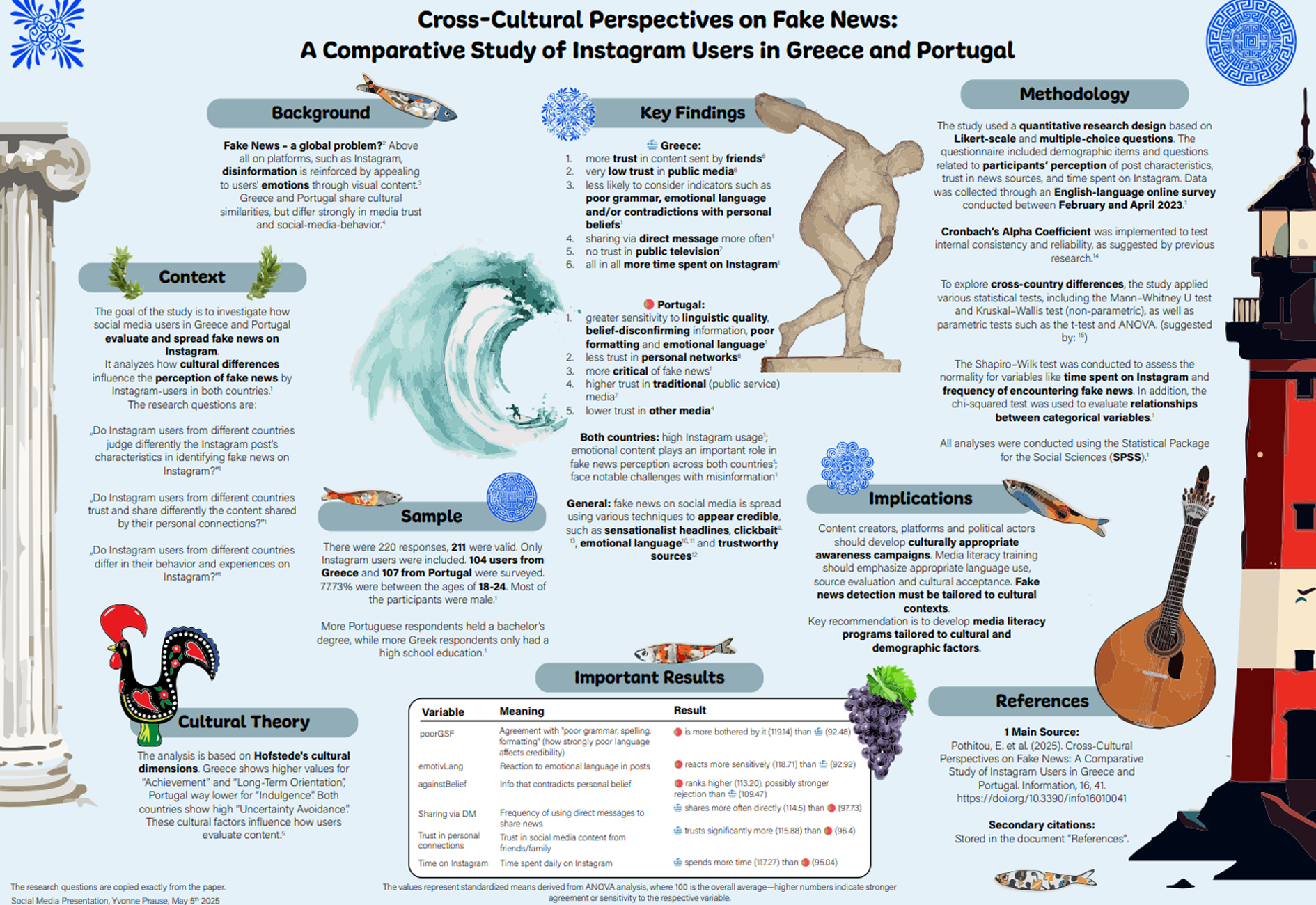
In today’s digital age, fake news spreads at lightning speed – especially through social networks like Instagram. Our comparative study explores how users from two different cultures – Greece and Portugal – deal with misinformation on Instagram and what cultural differences play a role in this.
by Yvonne Prause, DDP
WHAT IS ‘FAKE’ NEWS ALL ABOUT?
Key Findings
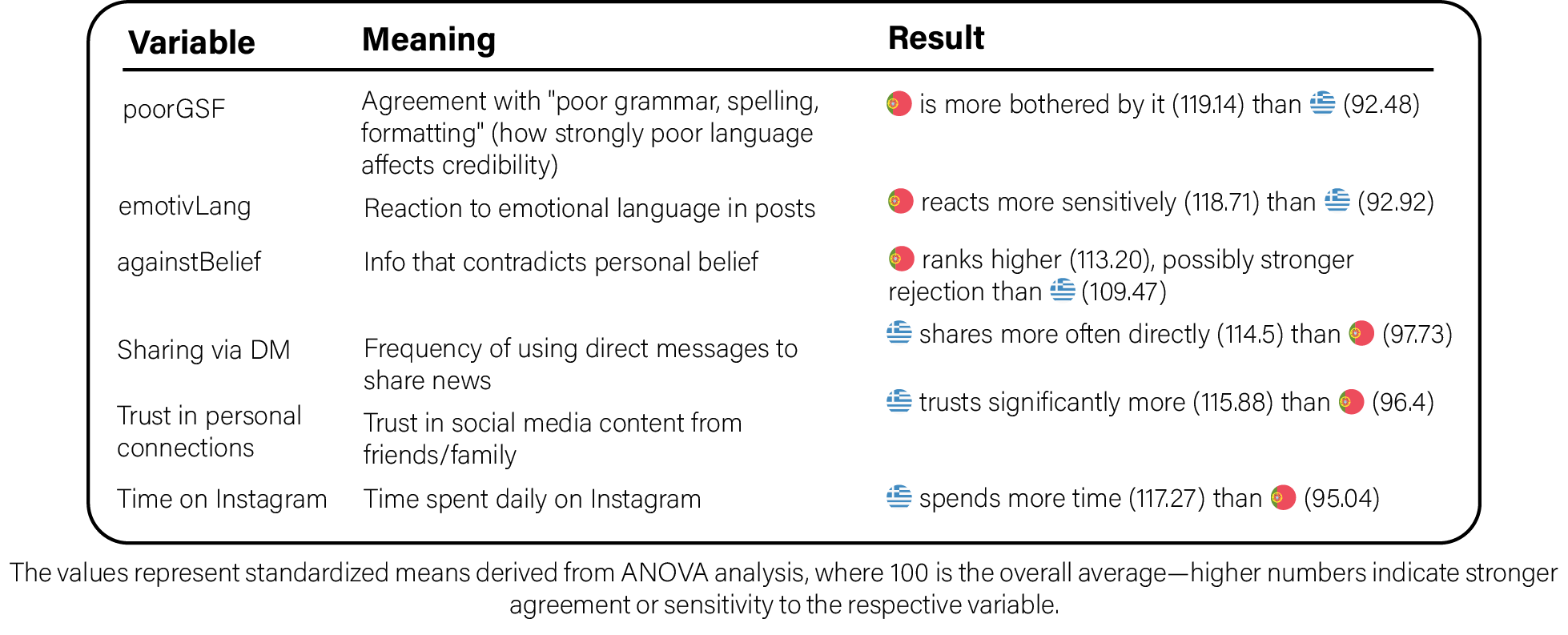
- Cultural Differences: Portuguese users tended to recognize and critically question fake news more frequently. Greek users, on the other hand, showed greater uncertainty when dealing with potentially false information.
- Role of Trust: In Portugal, there was a higher level of trust in established media and factchecking services, whereas in Greece, there was more skepticism towards official sources.
- Emotional Reactions: Greek respondents reacted more emotionally to fake news – such as with anger or frustration. Portuguese participants were more likely to respond rationally, by doing research or ignoring the content.
Background and Aim of the Study
Fake news is not only a global issue but also a culturally influenced phenomenon. The study aimed to identify differences and similarities in the perception and handling of fake news between Greek and Portuguese Instagram users. The focus was placed on cultural influences based on Hofstede’s model as well as individual media literacy skills.
Methodology
Qualitative and quantitative data were collected using an online questionnaire. The sample included 211 participants (only their answers were used) – 104 from Greece and 107 from Portugal. Respondents answered questions about their experiences with fake news, their media behavior, and their cultural attitudes.
Implications and Outlook
Fake news is not only a global issue but also a culturally influenced phenomenon. The study aimed to identify differences and similarities in the perception and handling of fake news between Greek and Portuguese Instagram users. The focus was placed on cultural influences based on Hofstede’s model as well as individual media literacy skills.
SOCIAL MEDIA ACTIVISM
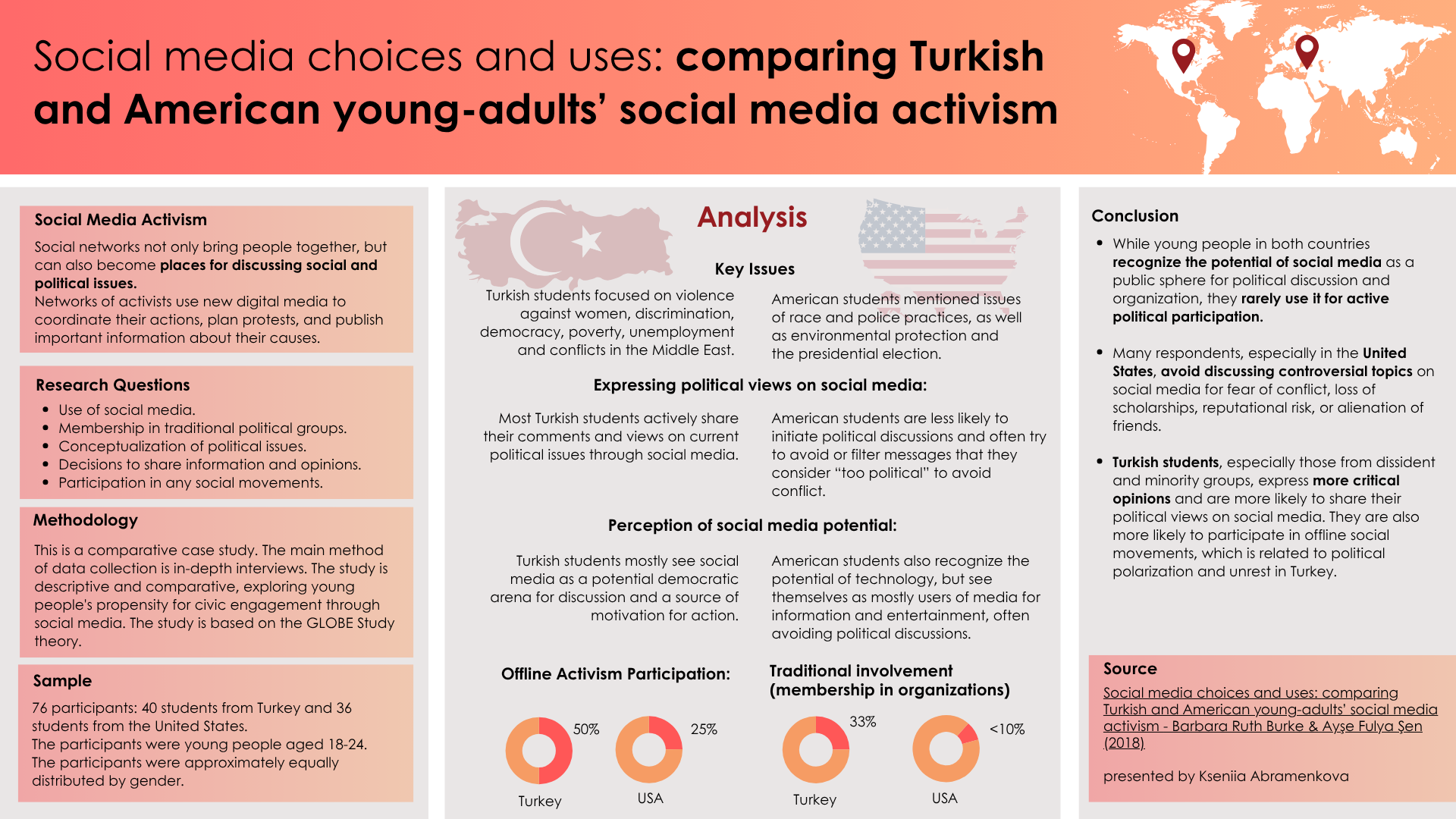
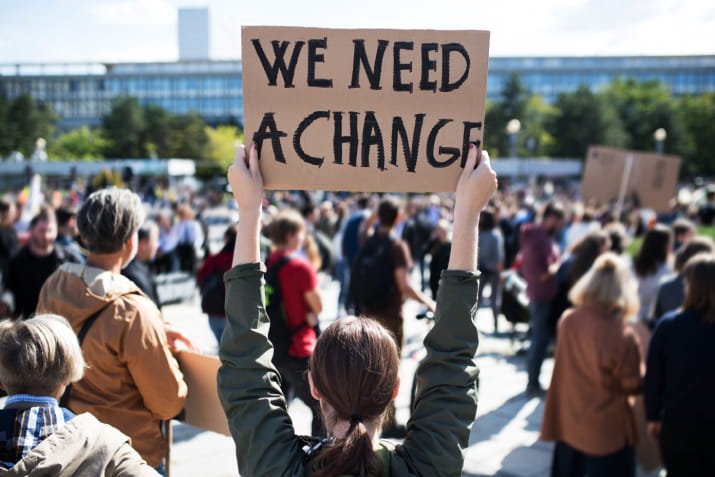
Social networks not only bring people together, but can also become places for discussing social and political issues. Networks of activists use new digital media to coordinate their actions, plan protests, and publish important information about their causes.
by Kseniia Abramenkova, DDP
WHAT IS SOCIAL MEDIA ACTIVIAM ALL ABOUT?
Key Findings
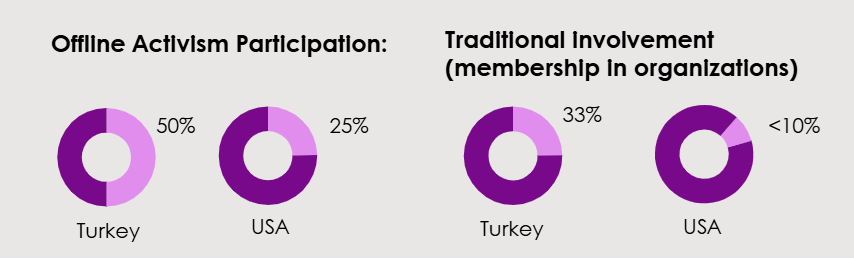
- Cultural Differences:Turkish students mostly see social media as a potential democratic arena for discussion and a source of motivation for action. American students also recognize the potential of technology, but see themselves as mostly users of media for information and entertainment, often avoiding political discussions.
- Topics of interest:Turkish students were mostly focused on topics like violence against women, discrimination, democracy, poverty, unemployment and conflicts in the Middle. East Many respondents, especially in the United States, avoid discussing controversial topics on social media for fear of conflict, loss of scholarships, reputational risk, or alienation of friends.
- Influence on the real-live activism:While young people in both countries recognize the potential of social media as a public sphere for political discussion and organization, they rarely use it for active political participation.
Methodology
Qualitative and quantitative data were collected using an online questionnaire. The sample included 211 participants (only their answers were used) – 104 from Greece and 107 from Portugal. Respondents answered questions about their experiences with fake news, their media behavior, and their cultural attitudes.
Implications and Outlook
Social networks serve not only as platforms for connecting people but also as spaces for engaging in social and political discourse. Activist communities utilize digital media to organize their efforts, plan demonstrations, and share critical information about their movements.
MARKETING
This study examines how influencer marketing (IM) impacts consumer behavior in Greece and the USA, with a focus on cultural values, media habits, and trust in digital personalities. It compares how Greek and American consumers perceive influencers differently and how these perceptions influence engagement, trust, and purchasing decisions. Through a cross-cultural lens, the research identifies what makes an influencer appear trustworthy in each country, and how marketing strategies must adapt to different cultural mindsets to be effective.
by Natalie Agyemang, DDP
HOW DOES INFLUENCER MARKETING AFFECT US?
Key Findings
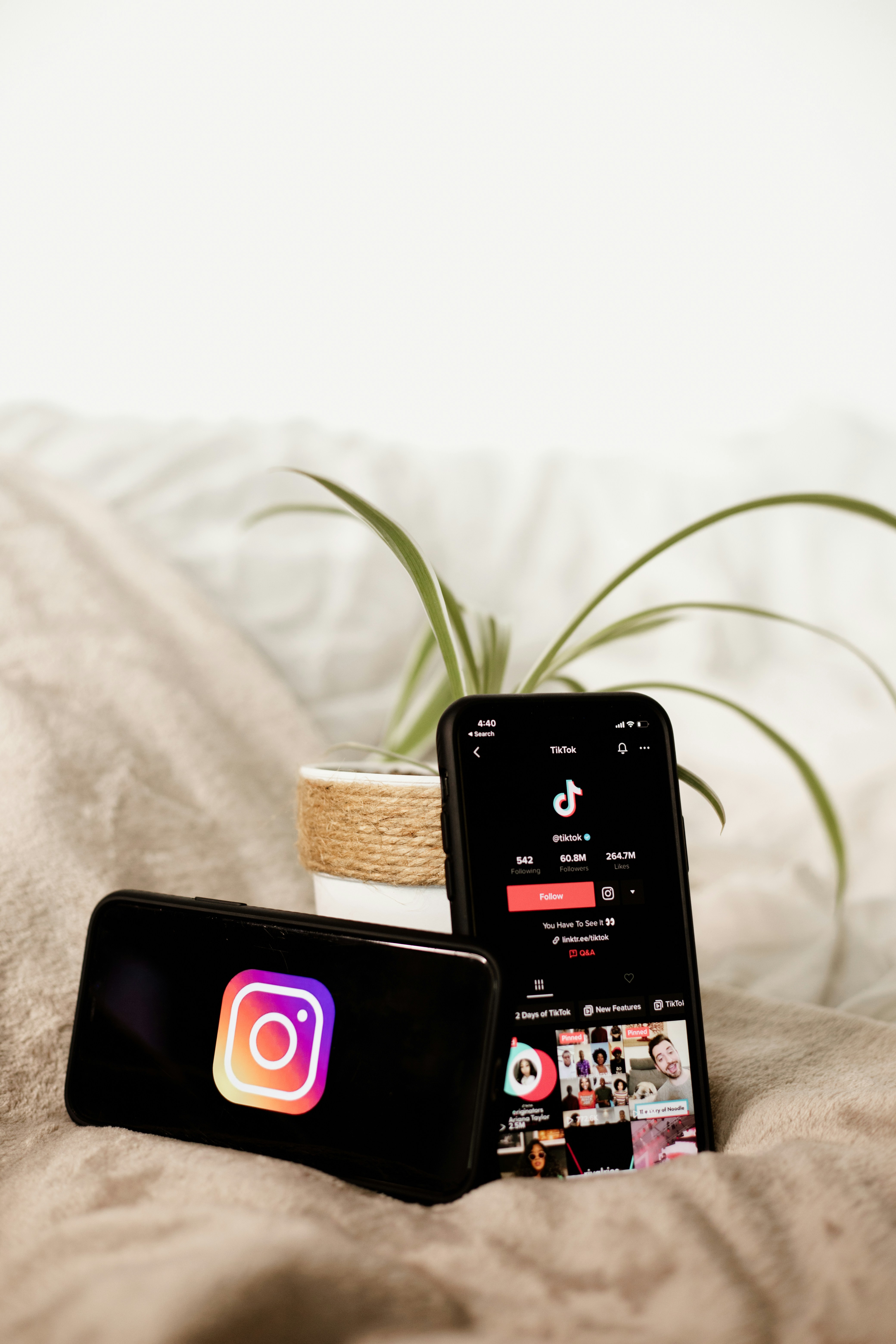
- Greek consumers are more likely to trust influencers who appear authentic, relatable, and aligned with local values or traditions. Emotional connection and a sense of shared identity are key.
- In contrast, American consumers prefer influencers who display expertise, confidence, and professionalism. Technical knowledge and structured content are more persuasive in this context.
- Social media usage is higher in the U.S., particularly on Instagram and YouTube. Greeks also use social media daily, but show more moderate engagement levels.
- Influencer recommendations lead to more purchases in the U.S. than in Greece. This suggests that American audiences are more open to commercial persuasion via digital influencers.

Background and Aim of the Study
Influencer marketing has become one of the most powerful tools in modern digital advertising. However, its effectiveness varies depending on how consumers in different cultures perceive trust, authority, and online interaction. The goal of this study was to understand why influencer marketing works well in some cultural contexts and less in others, using Greece and the USA as examples. The research focused on three main questions: How do cultural values shape consumer trust in influencers? What kind of marketing strategies are preferred in each country, and how do they differ? How does influencer credibility affect consumer behavior and purchasing decisions in each culture?
Methodology
The study is based on Hofstede’s cultural dimensions theory, especially the concepts of individualism vs. collectivism and uncertainty avoidance, to interpret behavioral differences. Data was collected through online surveys, social media distribution, and email lists, ensuring a diverse participant group. The final sample included 384 respondents from Greece and approximately 1,000 to 1,500 from the U.S., with the U.S. sample scaled to reflect its significantly larger and more diverse population. The analysis was performed using Python (in Visual Studio), applying Chi-Square Tests to examine associations, Two-Way ANOVA to explore group effects, and Logistic Regression to predict trust factors in both cultures.
Implications and Outlook
Marketing strategies need cultural sensitivity. A campaign that performs well in the U.S. may not resonate at all in Greece, and vice versa. For U.S. audiences, marketers should focus on authority-based messaging, detailed product insights, and influencers with professional appeal. For Greek consumers, emotional tone, cultural familiarity, and relatable storytelling are far more effective. These findings highlight the importance of digital literacy and consumer psychology in designing marketing campaigns. Future research could include other age groups, non-Western cultures, or newer platforms like TikTok, which is becoming increasingly relevant in influencer culture
SOCIAL NETWORKS
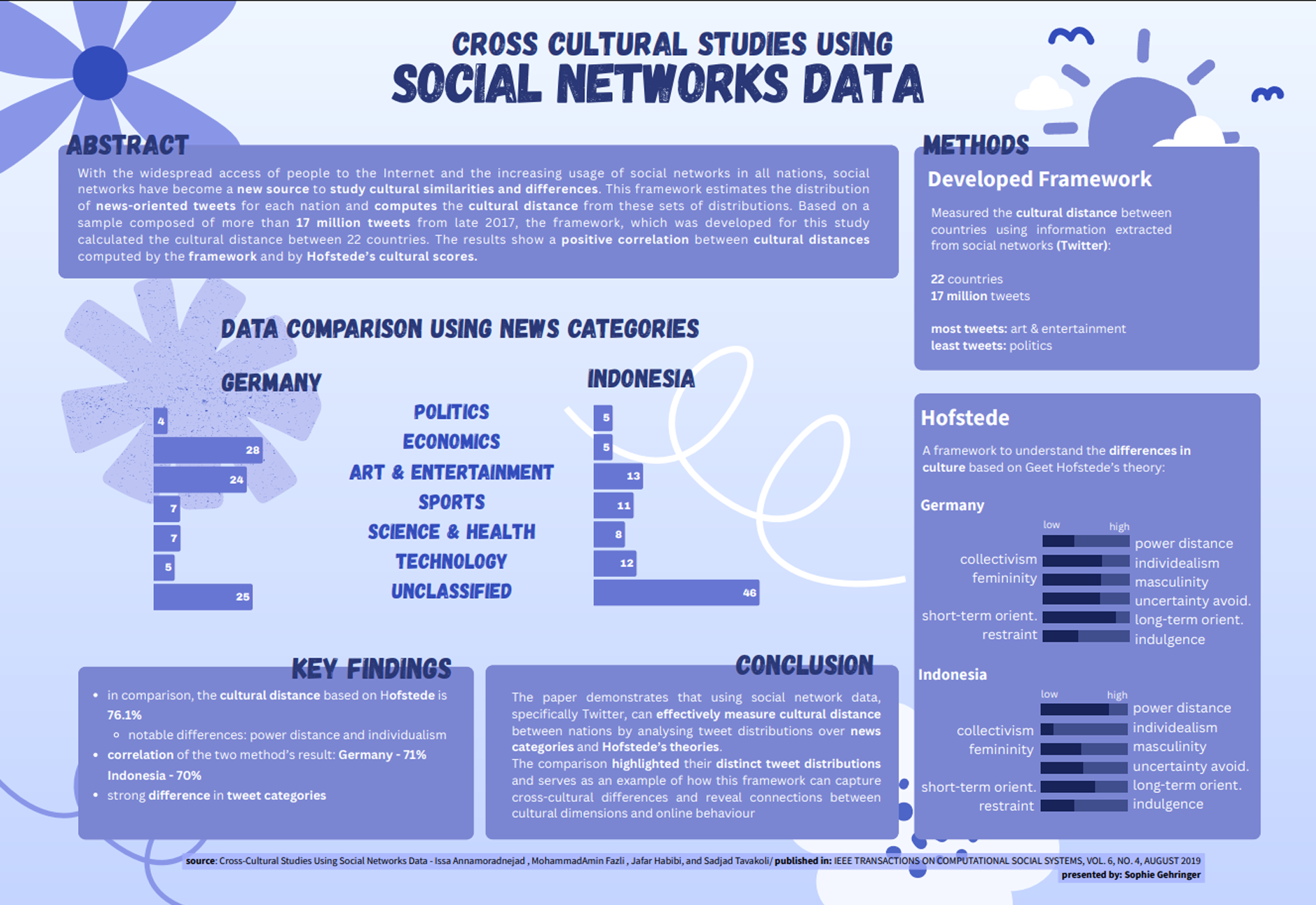
With the widespread access of people to the Internet and the increasing usage of social networks in all nations, they have become a new source to study cultural similarities and differences. This framework estimates the distribution of news-oriented tweets for each nation and computes the cultural distance from these sets of distributions. Based on a sample composed of more than 17 million tweets from late 2017, the framework, which was developed for this study calculated the cultural distance between 22 countries. The results show a positive correlation between cultural distances computed by the framework and by Hofstede’s cultural scores. In this poster the focus lies on the comparison between Germany and Indonesia.
by Sophie Gehringer, DDP
WHAT IS THE STUDY ALL ABOUT?
Key Findings
- Cultural distance: In comparison, the cultural distance based on Hofstede is 76.1% between those two countries. The highest notable differences are in power distance and individualism.
- Level of correlation: The correlation of the two method’s results are Germany - 71% and Indonesia - 70% respectively.
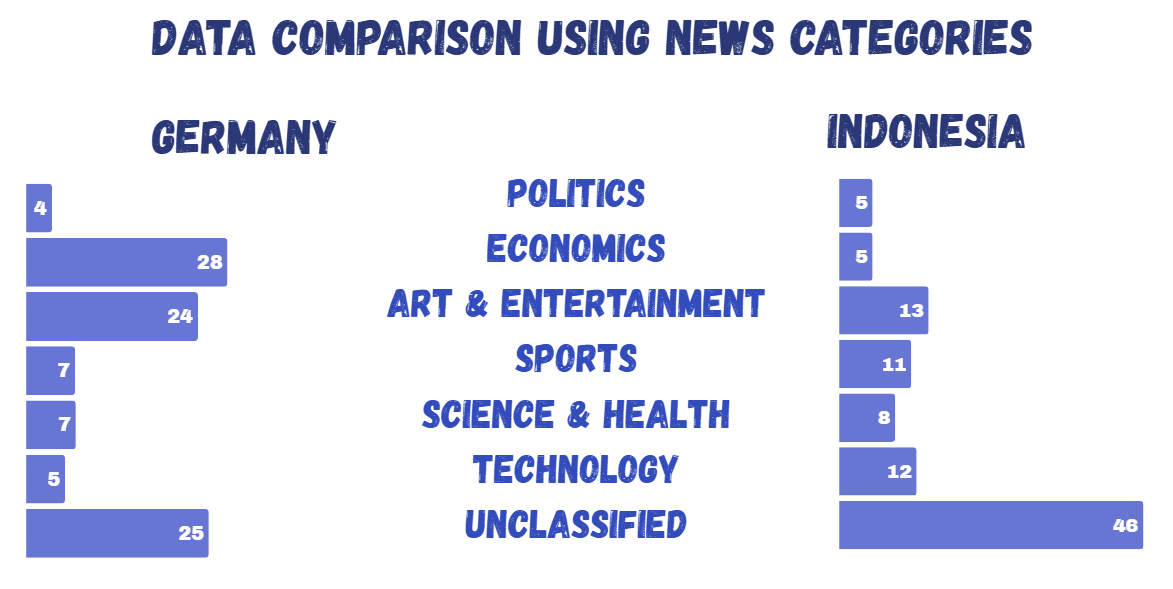
- Main findings: Lastly, it’s interesting to see that when Hofstede’s Individualism is high, that country has a large number of art – oriented tweets. When art and individualism is low, there’s a large chance that the power distance of that country is high.
Background and Aim of the Study
The study aimed to find a correlation between the cultural difference using Hofstede’s theory and their own developed framework which analyses tweets and categorizes them into different news categories. The developers wanted to prove, that their framework is a great way to research countries cultures.
Methodology
Data Collection and Categorization: A total of more than 17 million tweets were collected from Twitter. Each tweet was classified into one of the seven predefined news categories. Among these, Art & Entertainment emerged as the most dominant category, while Politics was the least represented. This distribution provided a basis for understanding national interests and cultural preferences as expressed through online behavior. Cultural Distance Measurement: Along with the Data Collection software they also analyzed the culture using Hofstede’s theory. Correlation Analysis: The researchers investigated the correlation between their Twitter-based cultural distance metrics and Hofstede’s cultural scores. This helped validate the framework and assess its effectiveness in capturing cultural differences through online data, due to proving, that those respective results often correlated very greatly with one another.
Implications and Outlook
The paper demonstrates that using social network data, specifically Twitter, can effectively measure cultural distance between nations by analysing tweet distributions over news categories and Hofstede’s theories. The comparison highlighted their distinct tweet distributions and serves as an example of how this framework can capture cross-cultural differences and reveal connections between cultural dimensions and online behaviour.
SOCIAL MEDIA USE
Do you know what factors can lead to the continuous use of social networks? In this article I will summarize the results of a scientific paper „The influence of network externality and fear of missing out on the continuous use of social networks: a cross-country comparison” by Abu-Shanab, E., Al-Sharafi, M. A., & Al-Emran, M.
by Júlia Kiss, DDP
WHAT CAUSES THE CONTINUOUS USE OF SOCIAL MEDIA?
Key Findings
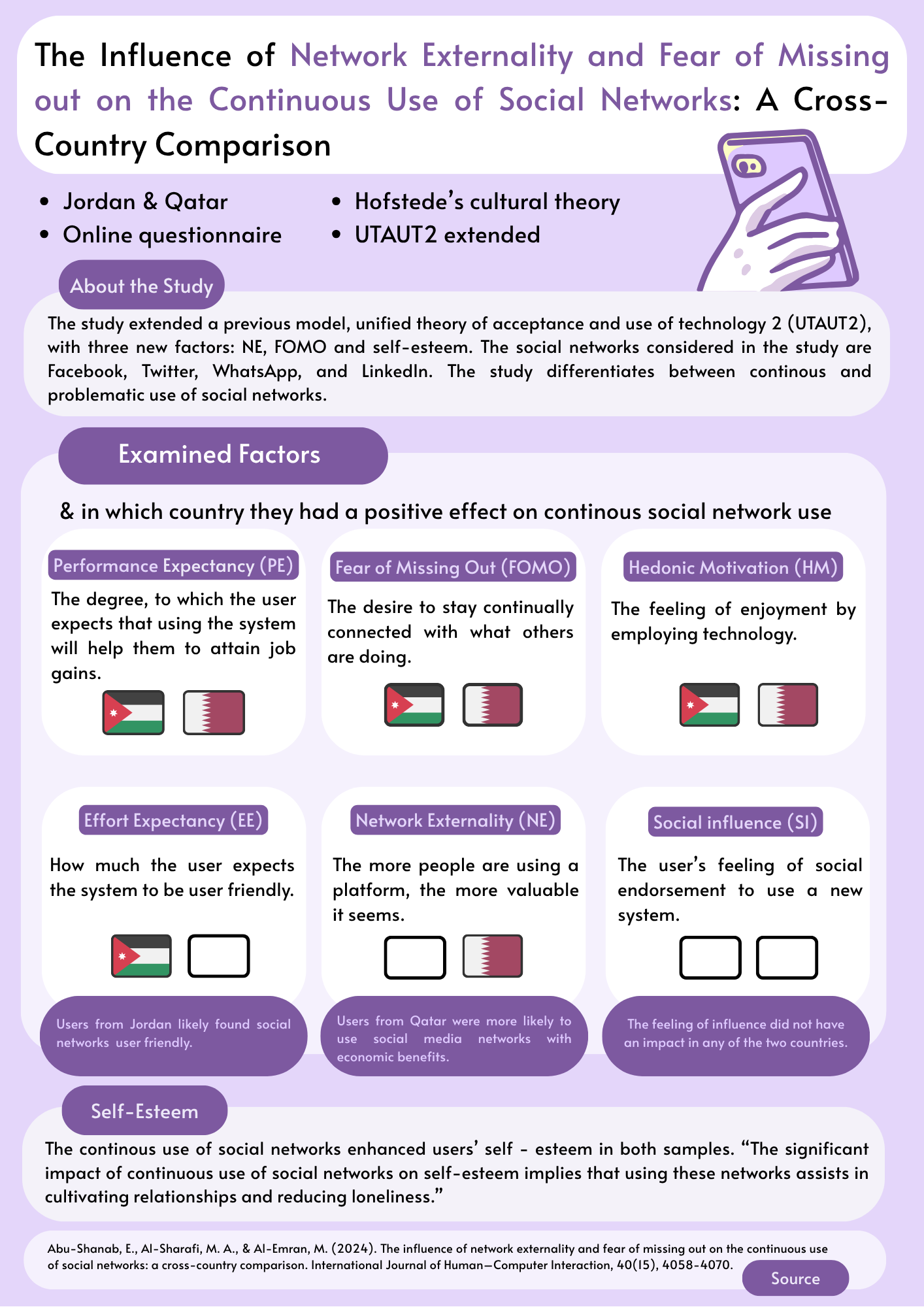
- Similarities in the results: The similarities between the two countries were that Performance Expectancy, Fear of Missing Out and Hedonic Motivation had a positive effect on continuous social network use. More interestingly, FOMO was not dependent on age, which means not just the young generations are more likely to continuously use social media, if they experience FOMO. Social Influence had a negative effect in both countries, which means the feeling of social influence to use these networks did not have an impact on users from Jordan and Qatar.
- Differences in the results: The differences are in the effects of Effort Expectancy and Network Externality. EE had a positive effect in Jordan only, which means users from Jordan likely found social networks user friendly and easy to use, while Qataris did not. NE had a positive effect in Qatar only, users from Qatar were more likely to use social media networks with economic benefits.
- The impact on self-esteem: The continuous use of social networks enhanced users’ self-esteem in both samples. “The significant impact of continuous use of social networks on self-esteem implies that using these networks assists in cultivating relationships and reducing loneliness.”

Background and Aim of the Study
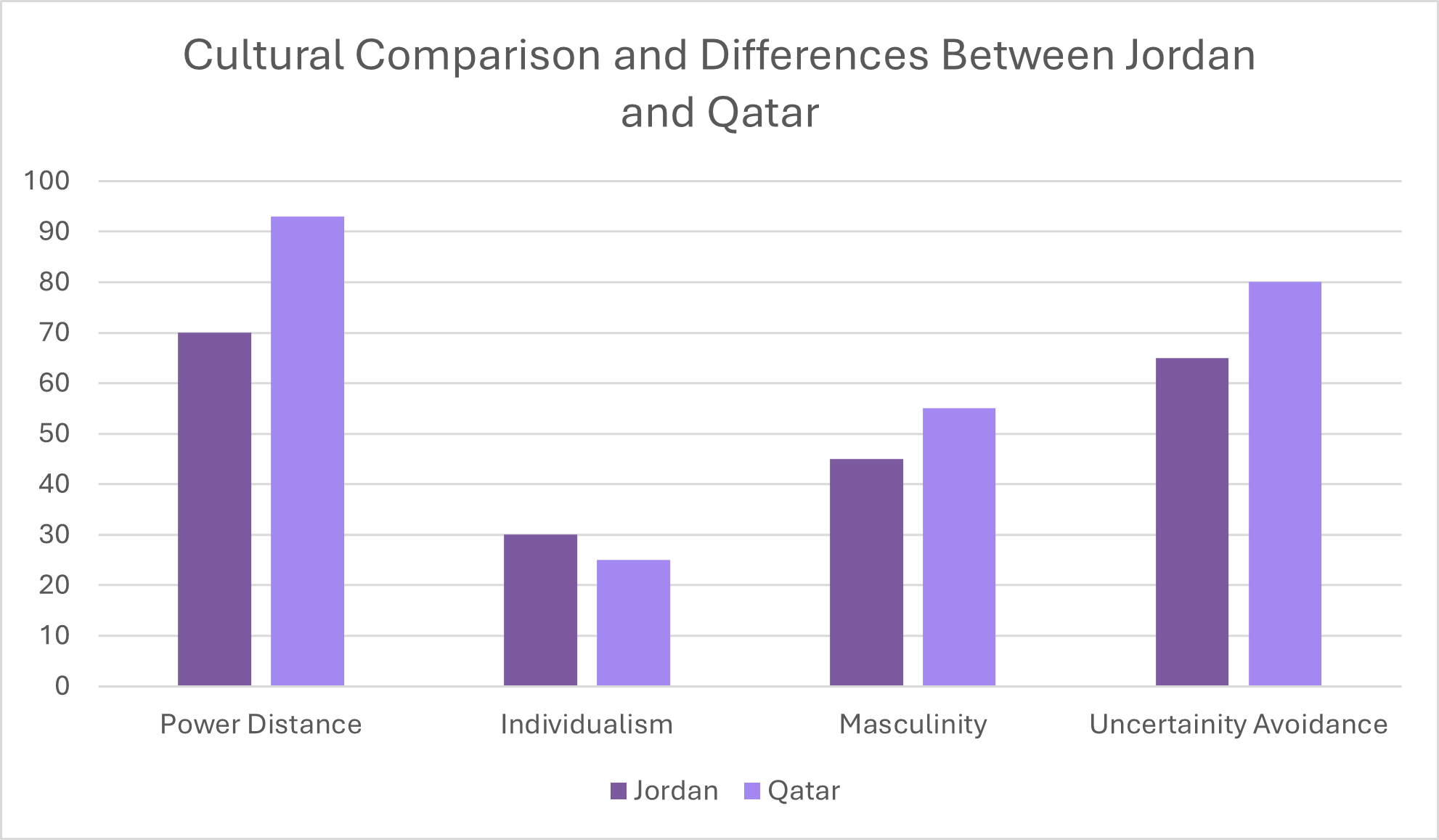
The study compares two countries, Jordan and Qatar, and examines what leads to the continuous social network use in these countries. The cultural comparison is based on Hofstede’s cultural theory. The cultural dimensions where the two countries differ the most are power distance and uncertainty avoidance, in both of them Qatar scores much higher. Jordan scores slightly higher in individualism, and Qatar scores higher in masculinity. The study extended a previous model, unified theory of acceptance and use of technology 2 (UTAUT2), with three new factors: Network Externality, Fear of Missing Out and self-esteem. The researchers used this extended model to predict the continuous social network use. The study differentiates between continuous social network use and problematic use, where continuous use means an ongoing engagement with social media platforms over an extended period, and does not imply negative impacts on well-being. On the other hand, problematic use means social media addiction, which is associated with negative psychological outcomes. The study focuses on continuous use. The social networks considered in the study are Facebook, Twitter, WhatsApp, and LinkedIn. The study is based on an online questionnaire, where participants had to answer questions on a Likert-scale. The sample size is 841, with 487 samples from Qatar and 354 samples from Jordan, all indicators and constructs were found to meet the criteria for reflective measurement in both countries.
Methodology
The four factors from the UTAUT2 model considered in the study are Performance Expectancy (The degree, to which the user expects that using the system will help them to attain job gains), Hedonic Motivation (The feeling of enjoyment by employing technology), Effort Expectancy (How much the user expects the system to be user friendly), and Social Influence (The user’s feeling of social endorsement to use a new system). The newly added factors are Fear of Missing Out (The desire to stay continually connected with what others are doing) and Network Externality (The more people are using a platform, the more valuable it seems, or a platform gaining values as it gains more users, often viewed from an economical perspective). The study examined based on the users’ answers from the online questionnaire, how these variables affect continuous network use, and how continuous use affects then the users’ self-esteem. The hypothesis was that all these factors will affect continuous network use positively, and the continuous use will enhance the users’ self-esteem.
Implications and Outlook
The research highlights cultural differences in the context of adoption to social network use, and shows how different factors affect the usage patterns in different cultures. The study did not consider the role of moderators, such as gender, age or experience.

CONSUMPTION
This study investigates how intensive social media use influences spending behavior in the U.S. and South Korea. It explores how emotional engagement with platforms like Instagram increases materialism and leads to impulse buying, credit card overuse, and conspicuous consumption, especially in cultures that emphasize individualism.
by Naomi Crismariu, DDP
How social media influences spending
Key Findings
- Social media increases materialism across both countries.
- In the U.S., it leads to more credit card debt and impulse buying.
- In South Korea, it mainly drives conspicuous consumption but users maintain more financial discipline.
- Materialism serves as a key mediator between social media use and spending habits.
Background and Aim of the Study
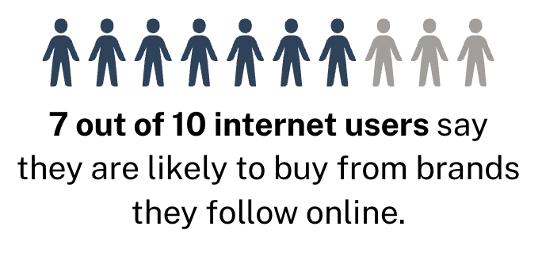
With 135 minutes per day spent on average, social media is deeply embedded in consumer lifestyles. The aim of this study was to examine whether and how the intensity of social media usage leads to poor financial decisions and greater materialistic values, and how these effects differ culturally.
Methodology
The study collected data from 659 university students, comprising 355 participants from the United States and 304 from South Korea. Surveys were administered to measure social media intensity, materialism, and spending behavior among these students. To examine both direct and indirect relationships between these variables across the two countries, structural equation modeling was employed.
Implications and Outlook
Social media has the power to influence personal values such as materialism. Consequently, marketing strategies should take into account cultural differences as well as the psychological effects on consumers. There is a growing need for enhanced digital literacy and financial education, particularly among younger demographics. Future research could broaden its focus by including a more diverse age range and by experimenting with social media campaigns aimed at promoting positive values.

ADDICTION
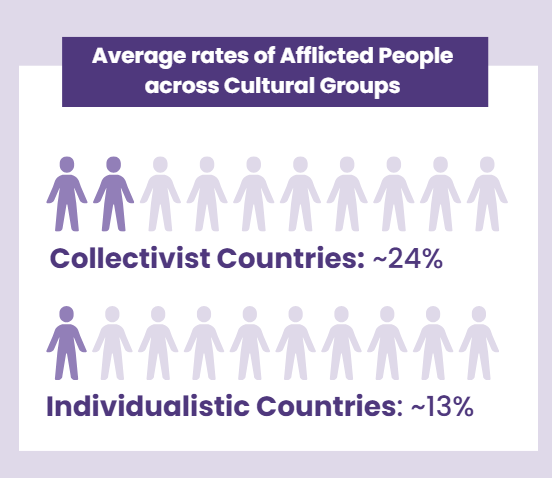
In some countries, staying constantly connected on social media isn’t just a habit - it’s a social expectation. A global study found that people in collectivist cultures like India and the Philippines are twice as likely to show signs of social media addiction compared to those in individualistic countries like the U.S. or Germany. It turns out, how much we scroll may have less to do with willpower and more to do with the values and norms around us. Tackling social media addiction means understanding both our screens and our societies. But what exactly drives this difference and what can we do about it? Let’s take a closer look.
by Sejla Huskic, DDP
SOCIAL MEDIA ADDICTION ≠ SOCIAL MEDIA ADDICTION
Key Findings
- Addiction Rates Vary Greatly by Culture. Social media addiction is nearly twice as common in collectivist countries (like the Philippines and India) compared to individualistic ones (like the U.S. and Germany).
- Different Cultures, Different Pressures. In collectivist societies, people often feel a stronger need to stay connected to maintain social bonds. In contrast, individualistic cultures emphasize personal boundaries, reducing pressure to stay constantly online.
- One-Size-Fits-All Solutions Won’t Work. Because cultural values shape online behavior, prevention and treatment strategies need to be tailored to local norms. What works in one country may fall flat in another.

Background and Aim of the Study
Social media plays an increasingly central role in daily life, but its excessive use has raised concerns about addiction, especially among younger users. While social media addiction (SMA) has been studied globally, much less is known about how cultural context influences its prevalence. This study aims to explore how SMA rates differ across cultures, specifically by comparing collectivist and individualistic countries. By analyzing data from 32 nations, the goal is to understand whether cultural values contribute to higher or lower addiction risks and what that means for future prevention efforts.
Methodology
This study is a meta-analysis combining data from 63 samples across 32 countries, totaling over 34,000 participants. It examined social media addiction prevalence using standardized tools like the Bergen Social Media Addiction Scale (BSMAS). Countries were categorized as collectivist or individualistic based on Hofstede’s cultural dimensions.
Implications and Outlook
Social media addiction is shaped not only by individual habits but also by cultural context. In countries where constant connection is expected, addiction rates are significantly higher. This calls for culturally adapted strategies in education, health, and tech policy. Future research should explore long-term effects and how digital behaviors shift with changing norms.